 Image 1 of 3
 Image 2 of 3
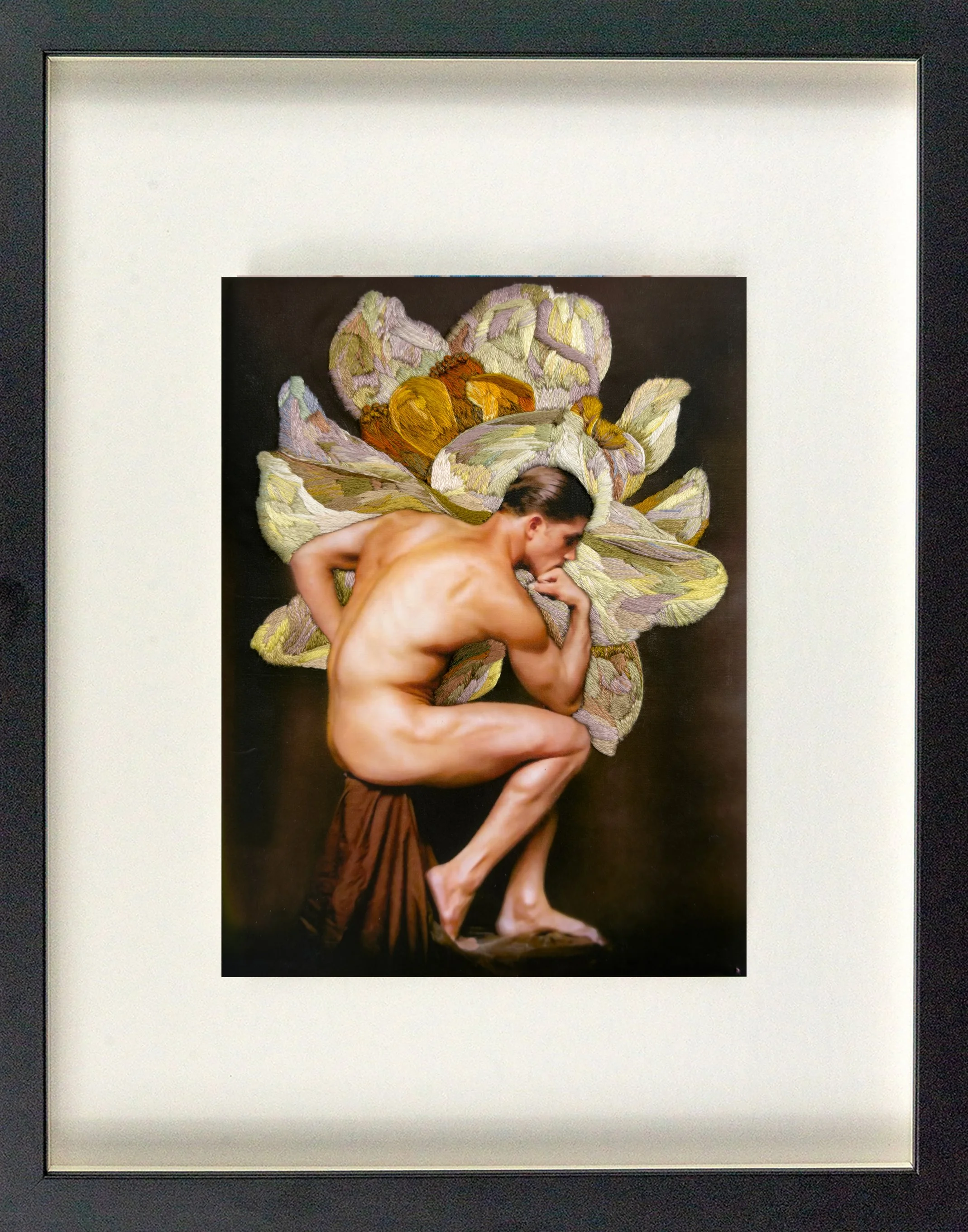 Image 3 of 3
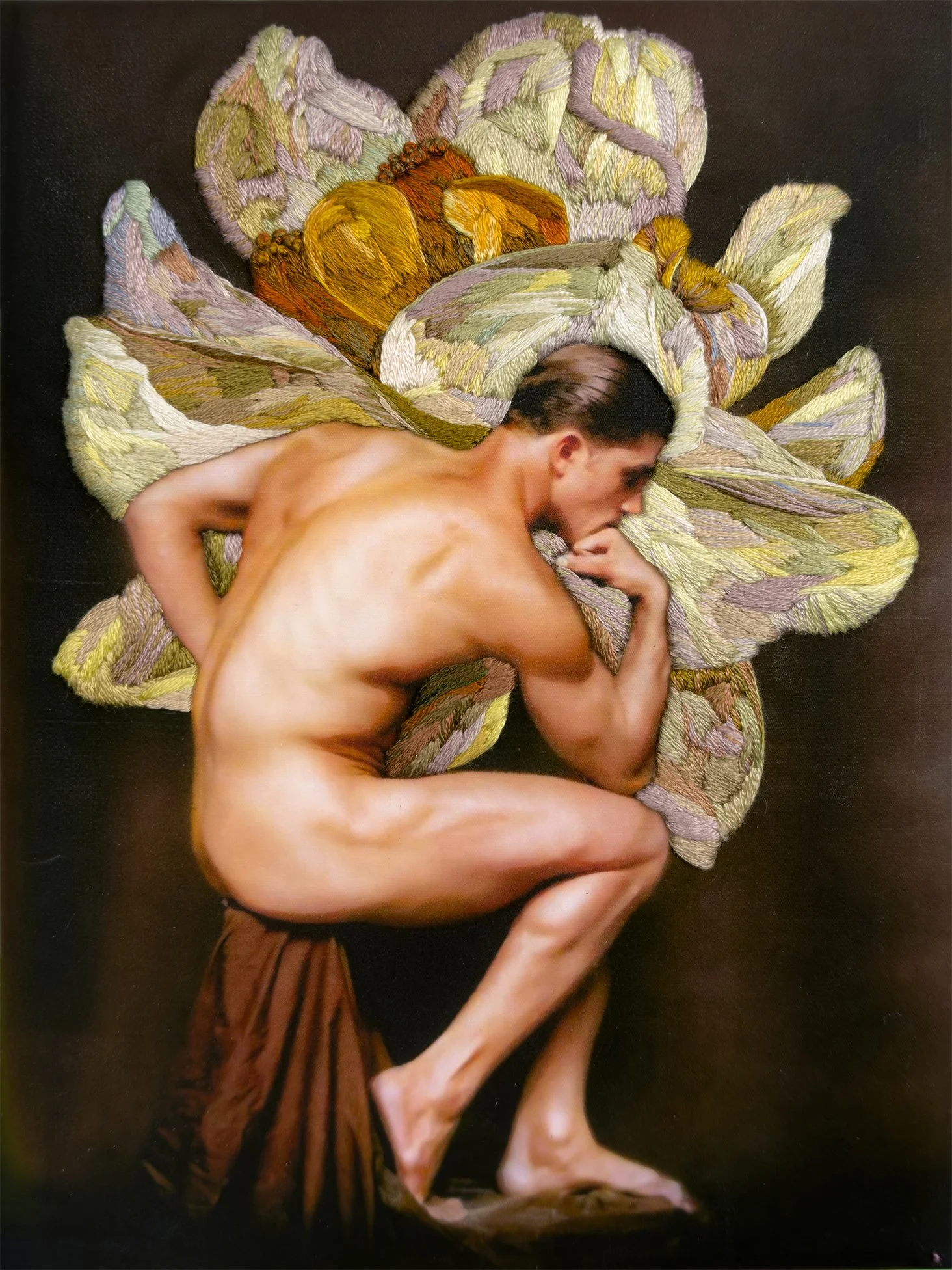
Narcissus
The narcissus flower has opened around him like a second skin. It is not a reflection he gazes into, but a world that grows from within.
Oscar Wilde retold the myth: the pool mourned Narcissus not for his beauty but because it had seen its own beauty reflected in his eyes. In The Disciple, Wilde’s pool suggests that self-regard can be a yearning for recognition that has been withheld.
The figure turns inward, in the posture of Auguste Rodin’s Thinker. Gay men learned to watch themselves carefully in a world that observed them with suspicion. From that interior life, something else grew — a daring, a flourishing, a blossoming that was its own form of survival.
The flower is drawn from Barbara Regina Dietzsch, Narcissi with a Dragonfly (18th century). Photograph by Edwin F. Townsend; it is believed to have been taken around 1945; the model is believed to be Tony Sansone.